


From Quiet Students to Confident Networkers: Three Days That Changed Everything
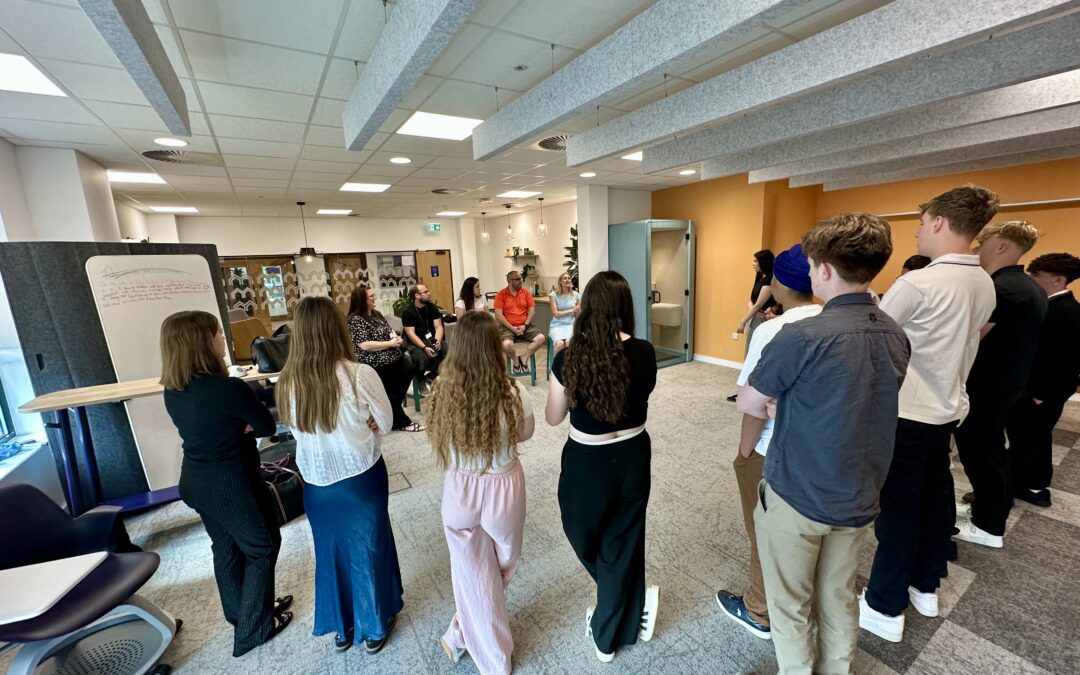
Monday morning, 9:00 AM. Sixteen sixth form students walked into Melton Building Society’s headquarters. Some struggled to make eye contact. Most were meeting each other for the first time. None knew what to expect.
Wednesday afternoon, 2:15 PM. Those same students stood confidently presenting to a room of 50 local business professionals, articulating their learning with clarity and grace, thanking volunteers for investing in their futures.
This is the story of what happened in between.
The Challenge We Set Out to Solve
After four years as an Enterprise Advisor, I’d grown frustrated with the gap between strategic planning and immediate impact. Five-year visions are important, but what about the students sitting in classrooms right now? What about the Year 11s who need authentic workplace experience today, not in three years when the strategy’s finally implemented?
The mathematical impossibility of traditional work experience had become increasingly clear. Schools need placements for hundreds of students. Local businesses struggle to accommodate even one or two. The traditional model simply doesn’t work at scale.
So we created something different: intensive three-day programmes where multiple business volunteers collaborate to deliver authentic workplace experiences that actually transform students’ confidence and capabilities.
When Melton Building Society agreed to host and fund our programme, we had our chance to prove the model works.
Day One: Building Foundations
Morning: The Careers Panel
Six professionals gathered around our students on Monday morning. Family law solicitor Nicola Magrath. Golf professional Tony Westwood. HSBC Credit Risk Manager Rebecca Pawsey. University of Leicester’s Clare Edwards. Melton Building Society’s James Sentance and Josh O’Neill.
The diversity was deliberate. We wanted students to see that successful careers come in countless forms, that paths are rarely linear, and that authenticity matters more than perfection.
Tony opened with a simple truth: “I love my job. I get up every day and do something that’s my hobby.” His 40-year journey from engineering to golf professional demonstrated that following your passion isn’t just idealistic dreaming – it’s a viable career strategy.
Rebecca shared a reality check that silenced the room: “A missed payment at 18 will still show on your credit file when you apply for a mortgage at 24.” Suddenly, financial literacy wasn’t theoretical. It was immediate and relevant.
The questions from students revealed their genuine curiosity:
“How competitive is it to get into your sector?”
“What mistakes do young people make unintentionally?”
“Did you have enough time or too much time when building the LEGO duck?”
That last question came from our afternoon activity, where students discovered their working styles through hands-on tasks rather than questionnaires.
The Credit Risk Workshop
Rebecca transformed complex financial concepts into practical knowledge students would use immediately. They learned that:
Credit scores shown online aren’t what lenders actually use
Every financial product affects your credit file – even phone contracts
Direct debits and living within means prevent long-term financial damage
But the real learning came when students reviewed actual credit applications and made lending decisions themselves. Suddenly they weren’t just learning about credit risk – they were experiencing the complexity of real business decisions.
AI in the Workplace
Clare Edwards from University of Leicester introduced students to practical AI applications for workplace productivity. Within an hour, students were:
Creating professional presentations using Gamma.ai
Summarising complex email chains with ChatGPT
Adjusting tone and clarity with Goblin AI
Understanding the critical difference between tools like Copilot (privacy-protected) and ChatGPT (trains on your data)
The key lesson? AI enhances human capability, it doesn’t replace thinking. Always fact-check. Never input confidential information into public tools. Think critically about when to use AI versus when human judgment is essential.
LEGO Serious Play
Julia’s afternoon session used physical activities to reveal behavioral patterns students might not recognise through discussion alone. Through spectrum line exercises, students discovered their approaches to:
Time management under pressure
Systematic versus intuitive problem-solving
Decision-making speed and confidence
The personal strength tower exercise had each student build a structure using exactly 10 LEGO bricks, with each brick representing a personal strength. Sharing these with partners created both self-reflection and peer recognition that built genuine confidence.
One student later reflected: “It helped me understand that different approaches to problem-solving are equally valid. I don’t need to work like everyone else.”
Real Project Work Begins
The afternoon shifted from individual learning to collaborative action. Students divided into specialist teams:
Design Team: Creating promotional materials using Canva for Wednesday’s networking event
Communication Team: Making professional phone calls to invite local businesses
Event Planning Team: Designing the complete attendee experience and logistics
Content Creation Team: Exploring podcast opportunities and digital media
This wasn’t practice. These were real deliverables with genuine consequences. Businesses were expecting professional invitations. The networking event needed proper planning. The pressure was authentic.
Personal Values Exploration
Neil Webster, Melton Building Society’s Head of Member Operations, closed the day by sharing his own career journey: “I didn’t really know what I wanted to do after university, so I went to my local building society just to get a bit of money. I loved it and have been in the industry for 20 years.”
His honesty removed pressure from students who felt they should have everything figured out. Success, he demonstrated, often comes from discovering values alignment through experience rather than predetermined plans.
Students completed online values assessments, narrowing hundreds of possibilities to their top five core principles. The difficulty of choosing revealed how seriously they took the exercise.
“It gets really hard when you have to choose,” one student admitted. But that difficulty created clarity. Written records of personal values that would guide career decisions for years to come.
Day Two: Building Confidence
Presentation Skills Workshop
Clare Bell transformed nervous students into confident presenters through practical techniques and genuine encouragement. By the end of the session, students who’d worried about speaking in front of small groups were preparing to address 50+ business professionals.
Professional Communication
James Colclough and Tony Westwood focused on telephone etiquette and networking conversation skills.
One student who described herself as “a bit blunt” in communication discovered tools to refine her professional tone without losing authenticity.
“I liked the fact that I know I can be blunt,” she reflected. “That AI tone adjustment tool could help me so that I don’t send emails that might offend somebody else.”
Self-awareness combined with practical solutions. That’s genuine professional development.
Team Building & Digital Skills
Ross Spencer’s team building activities reinforced collaborative problem-solving whilst the afternoon LinkedIn workshop gave students tools to maintain professional connections beyond the programme.
Students learned to create compelling profiles, write connection requests that get accepted, and use LinkedIn as an ongoing career development resource rather than just a job-hunting tool.
Day Three: Showcasing Transformation
Heidi Simms delivered perhaps the most sobering session of the week. Starting with a £30,000 graduate salary – a figure that seemed impressive to students – she methodically worked through payslip deductions. PAYE tax. National Insurance. Pension contributions. Student loan repayments.
“So you’re looking at £30,000 pounds,” Heidi explained, “but you’re actually going to receive £1,974 a month.”
The reality check deepened when she revealed employer costs: “Your company isn’t just paying you £2,500. They’re also paying another £400 towards national insurance and pensions. They’re actually paying £2,900 a month just to employ you.”
Students then tackled real-world budgeting, working in teams to allocate their theoretical take-home pay across rent, council tax, groceries, utilities, transport, and mobile phones. The basic needs alone consumed roughly 50% of income before considering wants like clothes, social activities, or subscriptions.
“Do you know what the solution is when you realize there’s not much left?” Heidi asked as students looked at their calculations in dismay. “Earn more money.”
But the real lesson was about building financial habits early. She introduced the 50/30/20 rule (50% needs, 30% wants, 20% savings) and emphasized the crucial difference between good debt (mortgages, student loans) and bad debt (payday loans, high-interest credit cards). Students learned about credit scores, emergency funds, and why having 3-6 months of savings could be the difference between coping with redundancy and financial crisis.
One student’s reaction captured the session’s impact: “It’s a bit overwhelming, isn’t it, when you realize that there’s not much left when you’ve paid all the other bits out.”
That’s exactly the kind of realistic financial literacy these students needed to hear.
Small Business Finance Workshop
Dan Bennett, breaking every accountant stereotype (shorts, t-shirt, toenails painted by his son), walked students through real business planning. Working in teams, they developed complete business plans for mobile car valeting and coffee cart services.
The financial reality was sobering:
£685 monthly fixed expenses
£2,000 personal income requirement
Total: £2,685 monthly revenue needed
At £20 per car wash: 14 cars daily
At coffee pricing: 40 cups daily
“That’s actually quite doable,” one student observed, “but you’d need a lot of cars every day.”
Dan’s key message resonated: “Start small. Don’t invest heavily until you know the business works.”
Students left with complete business plans they could potentially execute during summer holidays. Several expressed genuine interest in testing their concepts.
Unicorn Business Workshop
Stacey Ferguson-Czersovski opened hearts and minds with her entrepreneurial journey: “At 16, I was folding napkins and clearing plates at a wedding venue. I never imagined I’d pitch at Goldman Sachs.”
Her message was powerful: “The next unicorn doesn’t have to come from Silicon Valley – it could come from Melton, and it could be any of you in the room.”
Students learned that:
Unicorn businesses (valued at $1 billion+) all started with single ideas
Less than 1% of startups achieve unicorn status, but they all begin somewhere
TikTok started as a lip-sync app
Airbnb began with a blow-up mattress in someone’s living room
Gymshark was built by a 19-year-old
Stacey’s six principles for success:
Start big
Stay curious
Ask bold questions
Solve real problems
Don’t fear failure
The next unicorn starts with you
Students created their own unicorn business concepts, complete with taglines and pitches. Two groups presented:
“Styling Made Simple”
“Aim Higher, Fly Further”
The confidence required to pitch business ideas to a room of peers represented remarkable growth from Monday’s tentative introductions.
The Networking Event
This was the moment everything came together.
Over 50 local business professionals filled Melton Building Society’s beautiful event space. Students who’d spent three days preparing finally showcased their learning.
Three students stood up to present. Their message was clear and heartfelt:
“We’ve learned about communication, presentation skills, and public speaking. We’ve practiced teamwork through LEGO and planning events. We’ve made phone calls to businesses inviting you here today. We’ve learned about networking, finance, and budgeting. And we’d like to thank you all for coming and enjoying the rest of the networking.”
The grace. The clarity. The professionalism.
Reception staff at Melton Building Society had already provided unsolicited feedback: “They were all so polite.” That authenticity – being professional even when no one important was watching – demonstrated genuine transformation.
The Impact That Matters
Immediate Transformations
The careers lead who worked with these students in school provided the feedback that matters most:
On confidence: “Would not have been able to give you eye contact and say hello beforehand. Her confidence transformation has been seriously transformational. I can see it in the classroom as well.”
On sustained impact: “I can’t wait to meet her mum at the next parents’ progress review to see if she can see the difference as well.”
On professional behaviour: “The reception staff said they were all so polite. Those are the things that count.”
Post-Programme Success
Three months later, the impact continues:
📊 One student secured a competitive Sheffield university programme, sharing success on LinkedIn
💼 Another student was nominated for and pursued a three-day HSBC insight programme in London
🏢 A third student gained an internship with a top accountancy firm
🌟 Multiple students are now “the most proactive” in engaging with alumni mentors
👥 Programme participants have become “role models to their group of friends” about professional development
Social Mobility Outcomes
Of the 16 students, approximately 14 came from non-professional family backgrounds. First-generation university candidates. Young people with limited career guidance at home.
These are the students who benefited most. The ones who needed authentic workplace experience most gained the most value.
This is what social mobility looks like in practice. Not abstract strategies, but specific students gaining confidence, networks, and capabilities that genuinely change trajectories.
The Partnership That Made It Possible
Melton Building Society’s Vision
As a mutual building society, community investment isn’t just CSR for Melton Building Society – it’s fundamental to who they are and why they exist.
They provided:
🏢 Beautiful professional venue (Mutual House)
💰 Programme funding
👥 Team member expertise (Neil, James, Josh, Rachel)
🤝 Networking event hosting
📈 Post-programme engagement opportunities
Rachel, Chief Customer Officer captured their perspective: “This partnership demonstrates our mutual values in action – investing in our community’s future while building relationships with remarkable young people who remind us why our work matters.”
Business Volunteers Who Gave Their Time
Over 20 local business professionals contributed expertise across three days:
Monday: Nicola Magrath, Tony Westwood, Rebecca Pawsey, Clare Edwards, James Sentance, Josh O’Neill, Julia Hancock, Neil, Rachel Kolebuk
Tuesday: Laz Grillo, Ross Spencer, Clare Bell, Stefanie Petroulis, Paul Henderson, Steph Leake
Wednesday: Dan Bennett, Stacey Ferguson-Czersovski, Heidi Simms, Debbie Flint, Andy Pearson
Each brought authentic professional wisdom. Each cared genuinely about student development. Each created moments of transformation.
When Stacey reached out after seeing the programme on LinkedIn, having never met me before, her motivation was simple: “I dropped out of education because there was never anyone inspiring me to do anything different. I wish there’d been opportunities like this.”
That’s why professionals volunteer. Not obligation. Not networking. Because they remember wishing someone had shown them what was possible.
What The Careers Lead Told Us
The most powerful validation came from the teacher who works with these students daily:
“My biggest feedback has been confidence. The transformation is visible in the classroom. Some of these students have alumni mentors, and participants from your programme are among the most proactive at engaging with their mentors.”
“They are almost now becoming like the role models to their group of friends of how to do that.”
The careers lead was so convinced of the model’s value, she adapted it for in-school use – creating bespoke projects with law firms, journalists, police, and medical professionals for students who couldn’t secure external placements.
That’s what happens when work experience genuinely transforms rather than just ticks boxes. It creates advocates who replicate the model because they’ve seen the impact firsthand.
The Model That Works
What made this programme successful?
1. Authentic Deliverables
Not observation. Real projects with external stakeholders. The networking event had to happen. Phone calls went to actual businesses. Presentations reached genuine professionals.
2. Professional Environment
Melton Building Society’s headquarters created genuine workplace experience. Reception staff, meeting rooms, professional spaces. Students felt the importance of where they were.
3. Generous Expert Volunteers
Professionals who genuinely cared about student development. Diverse careers demonstrating multiple pathways to success.
4. Three-Day Duration
Sufficient for transformation without excessive time commitment. Long enough to see confidence build. Short enough to be viable for schools and businesses.
5. Post-Programme Support
More local businesses working with schools and ongoing school integration sustained impact beyond the initial three days.
6. Social Mobility Focus
Deliberately targeting students who would benefit most – those from non-professional backgrounds with limited home guidance.
What’s Next
The Melton cohort was one of four cohorts in 20245 We’re now running additional programmes in 2026
Each programme adapts to local context whilst maintaining core principles: authentic projects, expert volunteers, professional venues, measurable transformation.
We’re also developing technology to sustain connections. A bespoke app connecting cohorts across programmes, enabling ongoing networking, career support, and peer learning beyond the three-day delivery.
For Businesses Considering Partnership
If you’re a business leader wondering whether this kind of partnership is worth it, consider what Melton Building Society gained:
✅ Direct access to motivated young talent
✅ Showcase of workplace culture to potential future colleagues
✅ Fresh perspectives from curious minds
✅ Strengthened community relationships
✅ Visible demonstration of mutual values
Their team members who participated shared expertise whilst being reminded why their work matters. That’s valuable for team morale and professional development.
For Professionals Considering Volunteering
If you’re wondering whether giving an hour of your time makes a difference, consider this:
One student went from struggling with eye contact to confidently presenting to 50 business professionals in three days. That transformation happened because professionals like you shared authentic journeys, practical wisdom, and genuine care for young people’s futures.
Your hour matters. Your story matters. Your willingness to show up matters.
The Thank Yous That Matter
To Melton Building Society especially Rachel, Emma on reception the entire team – thank you for believing in this vision and providing the professional environment that made transformation possible.
To every business volunteer who gave time, expertise, and authentic professional wisdom – you created moments that will ripple through these students’ entire careers.
To the 16 students who threw themselves into every activity with curiosity, courage, and growing confidence – you proved that authentic work experience creates genuine transformation.
To the careers lead and teachers at Melton Vale Sixth Form who selected students thoughtfully and supported the programme – your partnership made this possible.
The Final Word
Three days. Sixteen students. Twenty-plus business volunteers. One committed building society partner.
The result? Students who understand professional communication, financial literacy, business planning, and their own values. Young people with confidence, networks, and capabilities that genuinely prepare them for professional success.
Students who went from quietly asking about credit scores to confidently presenting to business leaders. From uncertainty about career paths to clarity about values alignment. From limited professional networks to connections with dozens of local business leaders.
This is what authentic work experience should deliver. Not box-ticking observation, but genuine transformation.
The next unicorn doesn’t have to come from Silicon Valley. It could come from Melton. And it could be one of these remarkable young people.
Interested in hosting a cohort or volunteering your expertise? Connect with The Business Hub Work Experience CIC on LinkedIn or visit our website to learn how you can help create transformational experiences for young people in your community.
About The Business Hub Work Experience CIC
We create authentic, modern work experience programmes that address the mathematical impossibility of traditional placements by bringing multiple business volunteers together to deliver intensive, transformational learning. Our mission centres on improving social mobility for students who lack family business networks, providing genuine workplace exposure through rotating business volunteers rather than traditional shadowing.
Operating across Leicestershire, Rutland and beyond, we partner with schools, local authorities, careers hubs and businesses to deliver meaningful career development experiences that create measurable, sustained impact on young people’s confidence, capabilities, and career trajectories.